The true story of a microalga that lives in the harshest of places — and the 15-year journey that turned it into a solution for livestock and aquaculture.

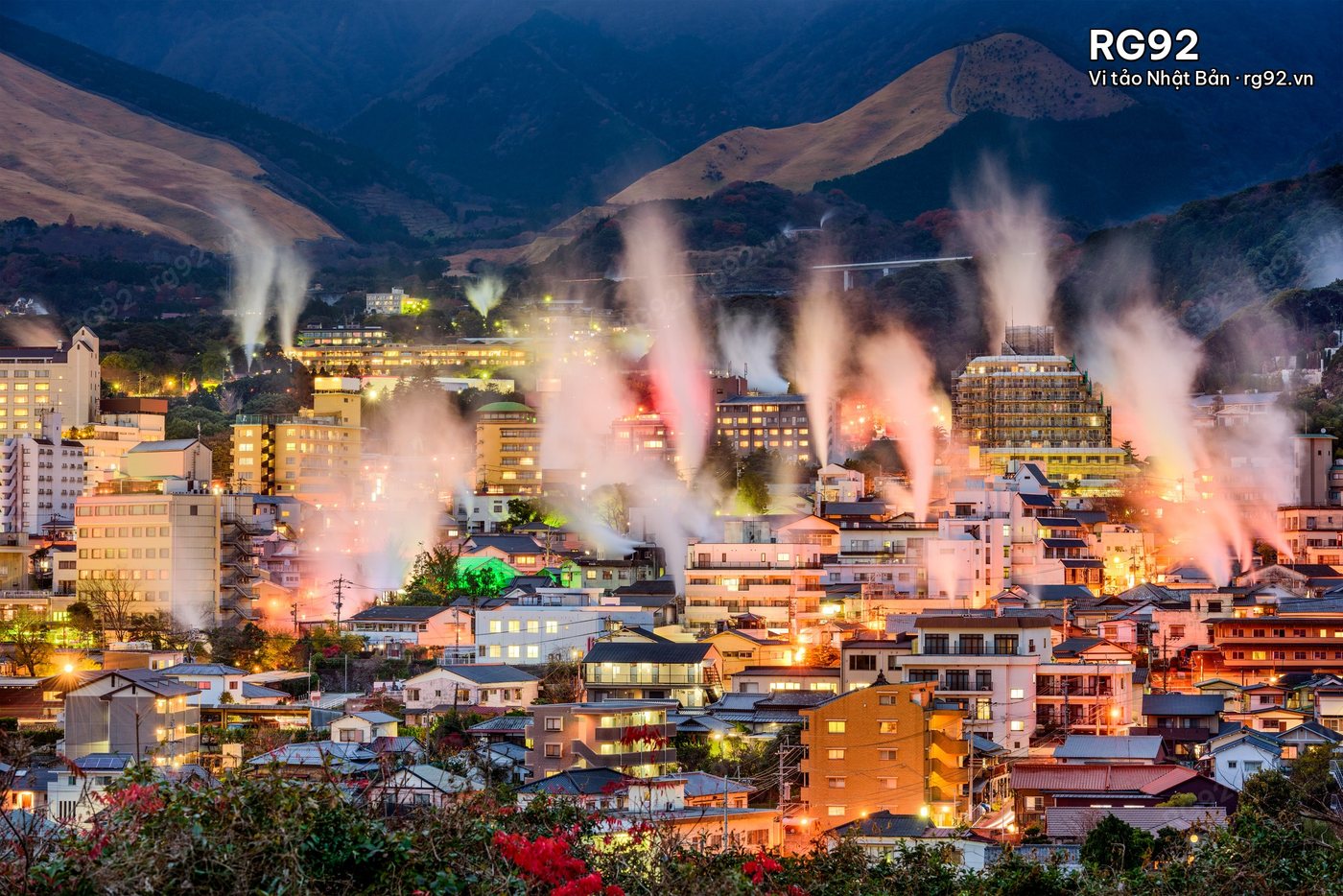
Beppu, Oita — one of Japan's most famous hot-spring towns.
Look out over Beppu in the morning and you see hundreds of white plumes rising everywhere — from hillsides, from alleys, from behind rooftops. Locals no longer notice, but to a first-time visitor the whole city seems to breathe.
It has roughly 2,847 spring sources, discharging up to 100 tonnes of hot mineral water per minute. Of the ten types of spring water found on Earth, Beppu holds nine. Some are crystal clear, some blood-red, some jade green, some bubbling mud pools the Japanese call "hells".
For thousands of years people came to Beppu to bathe and heal. But over a decade ago, some scientists came for a very different reason: what was living inside the harshest springs.
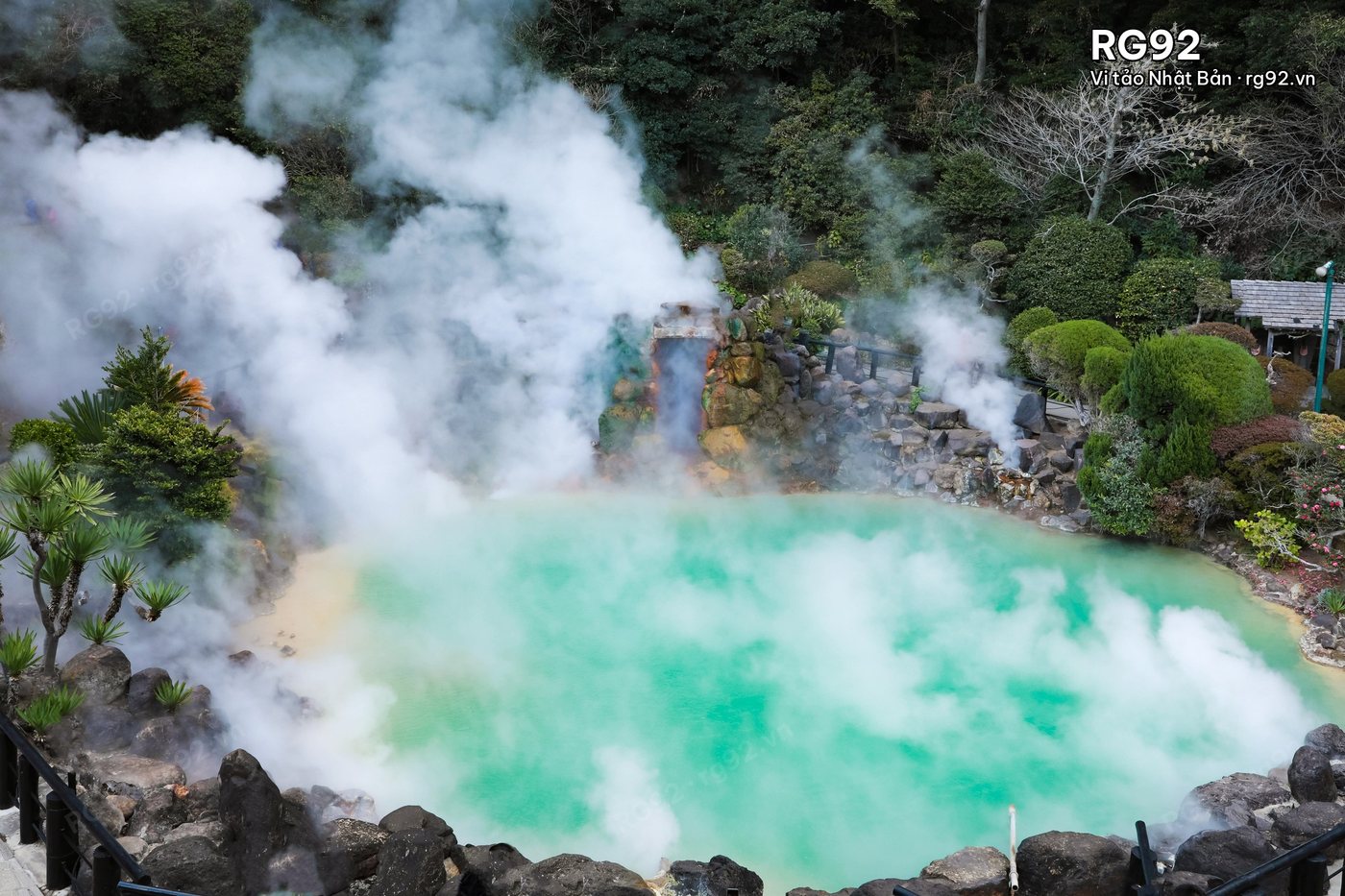
Where water boils at 80°C and acid corrodes metal, life persists.
To a scientist, Beppu's harshest springs pose a fascinating question: how could anything survive there? And yet microorganisms cling on and thrive. Science calls them extremophiles — "lovers of the extreme".
And here is the intriguing part: to live somewhere so extreme, an organism must carry special protective mechanisms — ones that organisms in ordinary environments never need. In other words, the harsher the environment, the more valuable the compounds its survivors may hold.
This is exactly why researchers at the SARABiO institute came to Beppu — searching for an organism tempered by nature under the harshest conditions.

Thousands of springs. Over 200 algae. And years of patience.
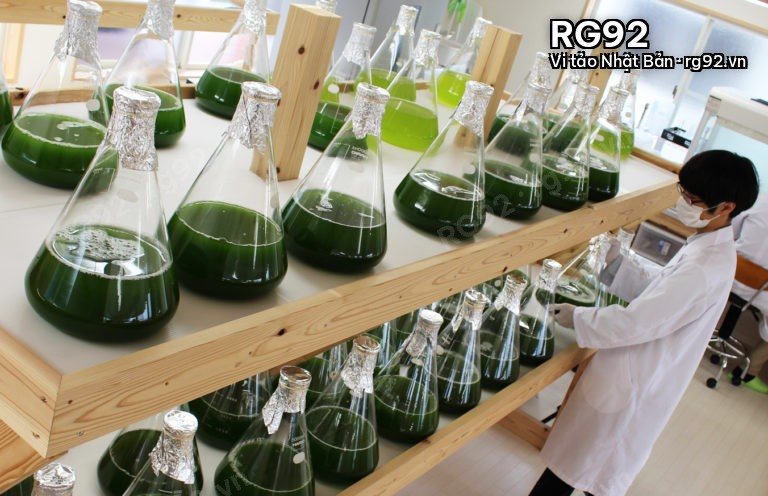
SARABiO's researchers collected samples from springs across Beppu and built a library of more than 200 microalgae. Each was cultured, analysed and tested to find the one with truly valuable compounds. There was no cinematic eureka moment; culturing a single batch alone took up to three months at first.
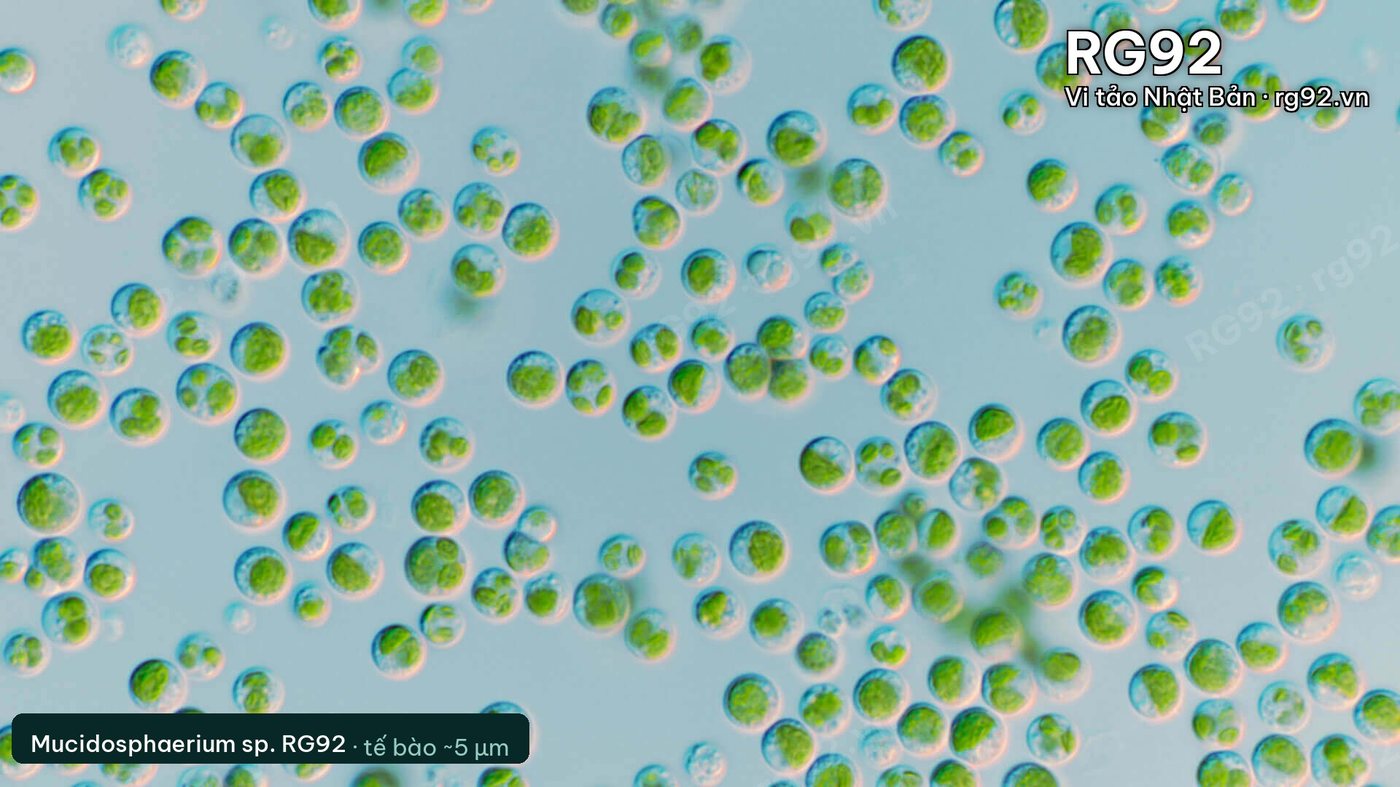
Then, on the 92nd attempt, they found it: a unicellular green microalga living in the mud of springs above 80°C, just about five thousandths of a millimetre across.
They named it RG92 — short for "Regeneration Gateway 92", meaning "a gateway to regeneration, found on the 92nd try". A name carrying both the patience of the journey and the belief in what this alga might unlock.

The answer lies in its genes.
For an alga just five thousandths of a millimetre across, a microscope alone is not enough — many green algae look alike. To identify it for certain, you have to read its genes.
The researchers sequenced a signature gene — 18S rRNA, a kind of "genetic fingerprint". RG92 turned out to be 99.39% similar to a known green alga, and was placed in the genus Mucidosphaerium, in the phylum Chlorophyta.
Its full scientific name: Mucidosphaerium sp. RG92. This transparent identification is precisely the foundation that later led major Japanese universities to collaborate on its research.

What makes RG92 special is not the alga itself, but a compound called DGDG.
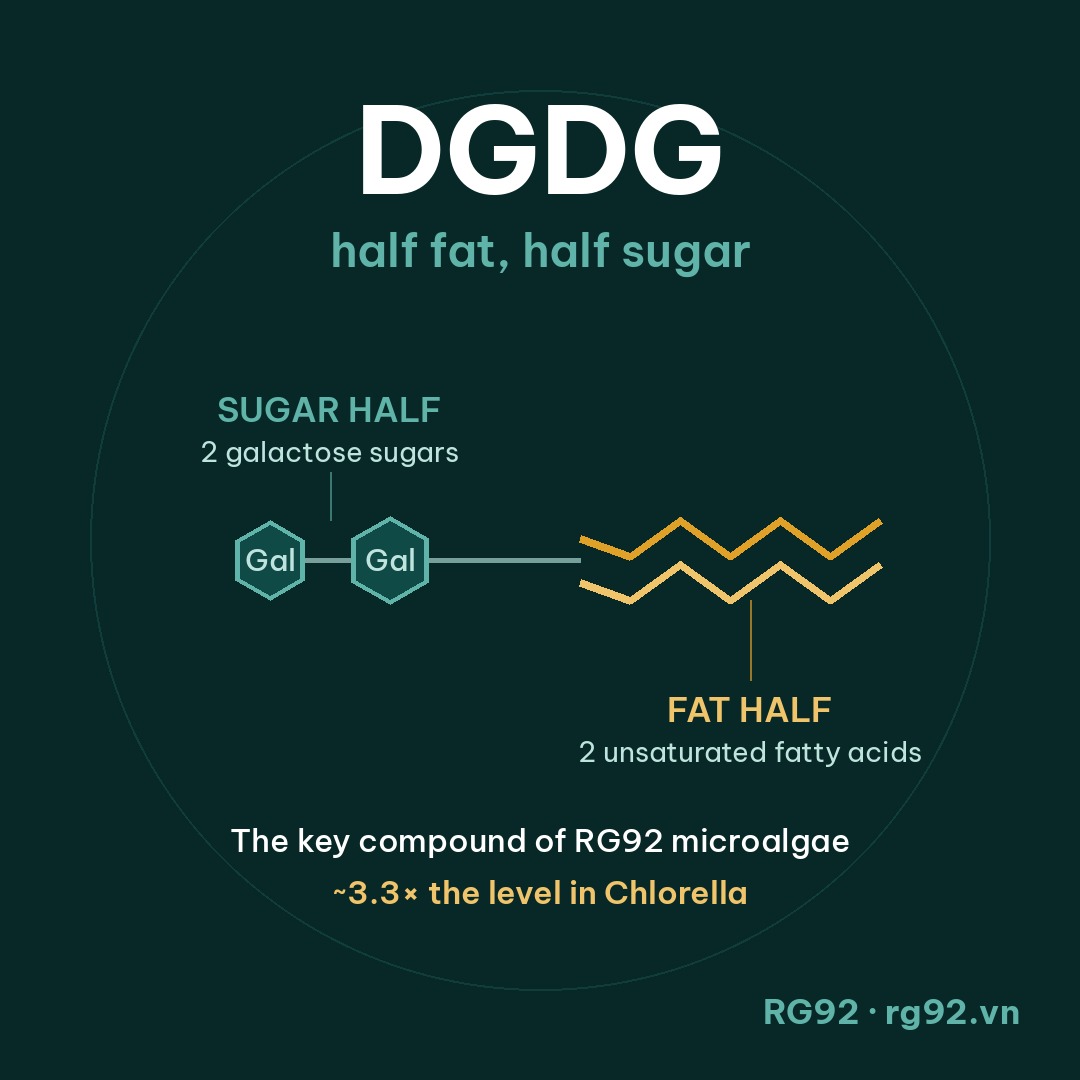
DGDG has a structure that is easy to picture: a fat half (two unsaturated fatty acids) joined to a sugar half (two galactose sugars). In short: half fat, half sugar. That "two-in-one" structure is what makes the difference.
DGDG is not rare — many algae contain it. But what sets RG92 apart is the amount: roughly 3.3 times that of Chlorella. That is why RG92 sits among the functional microalgae — used for a biological effect, not merely as a protein supplement.

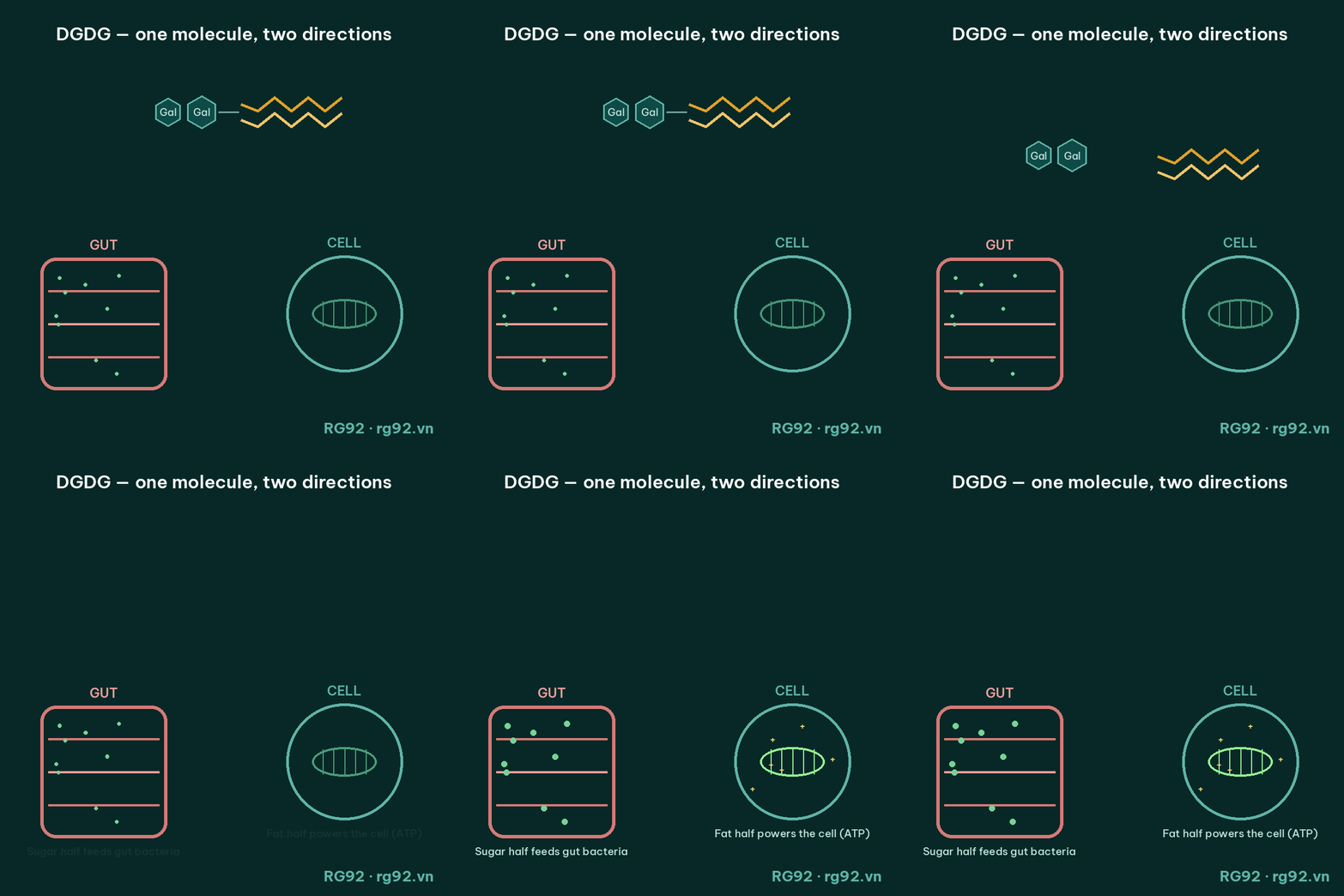
Inside the animal, DGDG splits in two — each half doing its own job.
The sugar half escapes digestion in the small intestine, reaches the colon and becomes food for beneficial gut bacteria — the ones that produce short-chain fatty acids, reinforcing the gut wall and modulating immunity.
The fat half is absorbed into cells and activates the mitochondria — the cell's "power plants" — raising production of energy (ATP). Well-powered cells work better, with stronger resistance and recovery.
This is what sets RG92 apart — what scientists call the dual mechanism: a single compound acting on both the gut microbiome and cellular energy at once. With a steady gut and well-powered cells, the animal can channel more of its resources into growth, reproduction and health.
That's the mechanism — but out in the field, what results does RG92 deliver? See the field figures on poultry, swine, cattle, fish and shrimp.